
Waterfront & Yacht Ownership · 1 min read
Matching Vessel Dimensions and True Loaded Weight to Dock Hoists
Selecting a vessel or evaluating a private waterfront mooring requires looking beyond standard manufacturer spec sheets.
By Premium Yacht Marketplace Editorial ·
Waterfront & Yacht Ownership Companion
Written for boat owners and buyers, based on analysis from Waterfront Yacht Homes. Read the full waterfront analysis on Waterfront Yacht Homes.
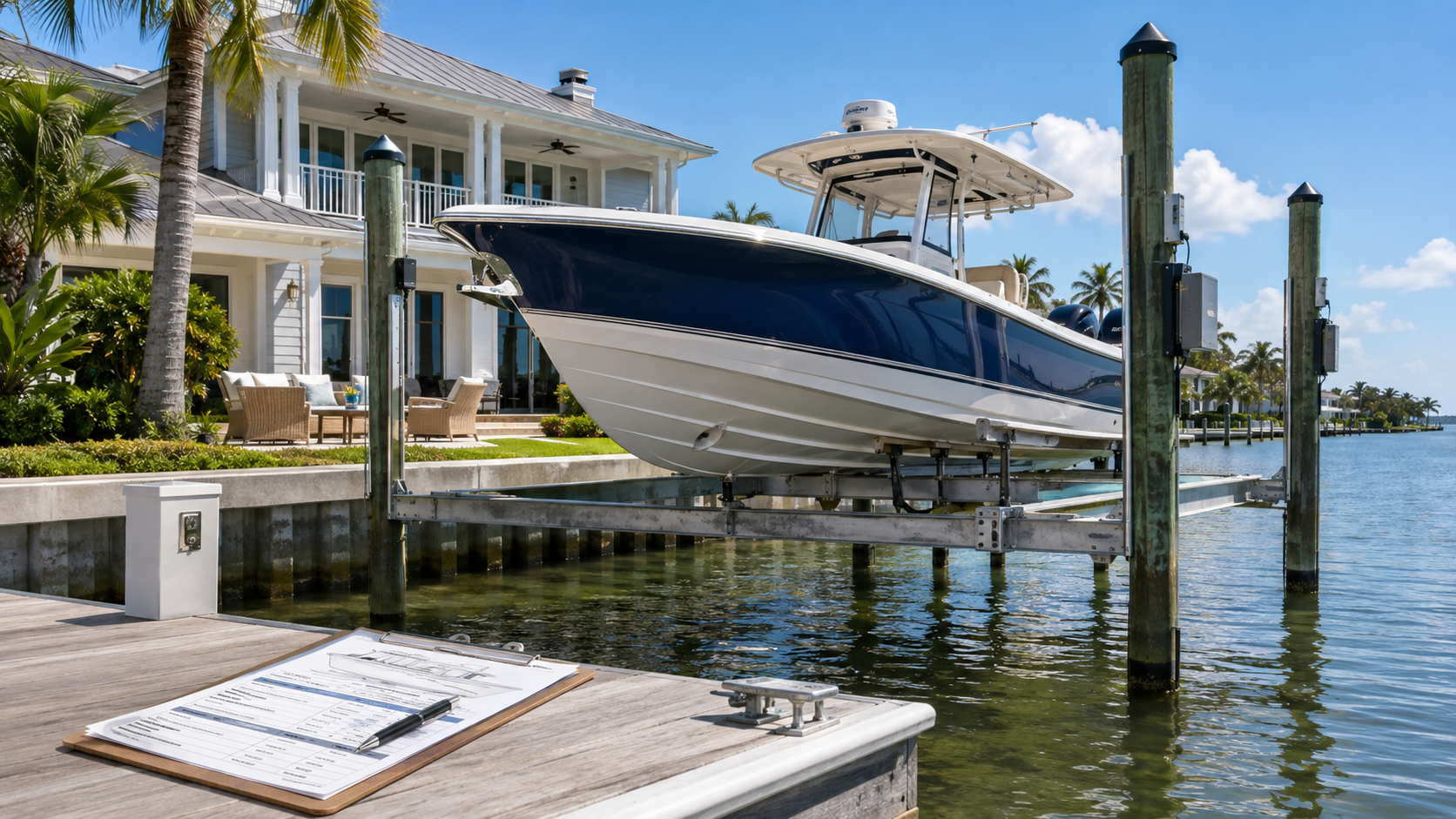
Selecting a vessel or evaluating a private waterfront mooring requires looking beyond standard manufacturer spec sheets. Published dry weights fail to account for outboard motors, full fuel tanks at six to seven pounds per gallon, freshwater systems at eight pounds per gallon, generators, towers, electronics, and onboard gear. To prevent severe structural overload or mechanical failure, owners must calculate the true wet operating weight and incorporate a recommended safety margin of fifteen to twenty-five percent above that figure before relying on an existing boat lift. Physical compatibility involves far more than lifting limits. A vessel's beam width and hull architecture dictate whether a lift cradle can safely handle the boat. Four-post layouts and finger pylon setups frequently cannot accommodate wide-beam vessels such as power or sailing catamarans and broad trawlers. Specialized hulls, including multihulls and pontoons, require specific cradle bunk alignments to evenly distribute weight across the frame. Overall length also imposes strict boundaries, making dock proportions critical, as undersized docks cannot safely secure large craft during shifting tides and severe weather. Long-term ownership practicality hinges on the physical integrity of the entire dock infrastructure. Buyers must examine wooden pilings for marine borer damage, structural rot, and lateral shifting, while evaluating cables, pulleys, and galvanized or stainless steel hardware for corrosion. If an existing setup proves inadequate, replacing pilings, dredging a slip, or expanding a dock layout introduces substantial regulatory and financial considerations. Such modifications typically demand coordinated approvals from homeowners associations, municipal authorities, and professional civil engineers alongside specialized marine contractors.
Next on Premium Yacht Marketplace
Boat Lift Capacity vs. Real Boat Weight: What Waterfront Buyers Must Verify
Talk to a broker
Working through a specific boat?
We answer every inquiry personally. Send the boat, the year, and what you're trying to decide.