
Waterfront & Yacht Ownership · 1 min read
Evaluating Waterfront Property Docking and Permitting Capacity for Gulf Coast Vessel Owners
Acquiring or upgrading a waterfront property along Florida's Gulf Coast requires boat buyers and yacht owners to carefully align vessel specifications with local docking infrastructure and multi-agency regulatory standards.
By Premium Yacht Marketplace Editorial ·
Waterfront & Yacht Ownership Companion
Written for boat owners and buyers, based on analysis from Waterfront Yacht Homes. Read the full waterfront analysis on Waterfront Yacht Homes.
Acquiring or upgrading a waterfront property along Florida's Gulf Coast requires boat buyers and yacht owners to carefully align vessel specifications with local docking infrastructure and multi-agency regulatory standards. Choosing the right vessel involves assessing more than just aesthetic preferences; owners must verify critical physical dimensions including vessel draft, beam, total length, and air draft relative to bridge clearances, canal depths, and localized water access.
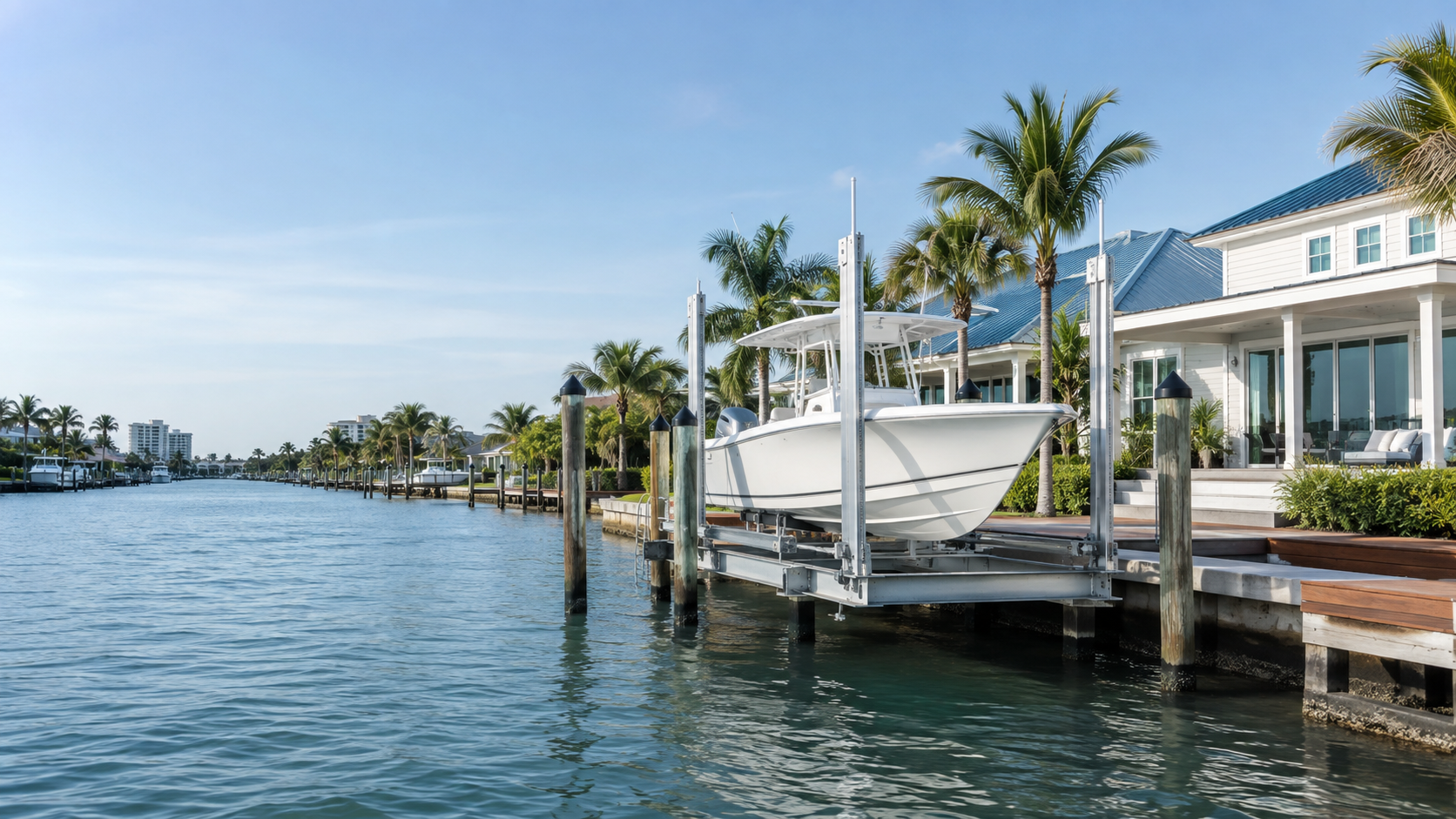
Existing wet slips must be evaluated for maximum length and beam allowances, while boat lifts demand close scrutiny of usable width, cradle setup, and overall weight capacity. In many cases, these structural tie-up limits are just as restrictive as natural water depth. Navigating dock and lift alterations entails dealing with state, local, and federal authorities, including the Florida Department of Environmental Protection, the U.S. Army Corps of Engineers, and municipal entities like Sarasota County's Water and Navigation Control Authority.
State exemptions may apply to smaller single-family docks under specific square-footage thresholds, but adding a lift typically requires modifying submerged lands authorizations and adhering to NFPA marine electrical codes. Practical planning must account for regulatory fees, such as minor work permit costs, contractor licensing requirements, and mandatory environmental surveys, such as seagrass assessments, which are restricted to specific growing seasons between April and September.
Because the complete permitting cycle can span up to six months, relying on purchase contingencies for new dock approvals is rarely practical. Buyers should instead investigate the site's historical usage, consult property owners, and thoroughly examine HOA covenants. Associations frequently dictate vessel length, dock footprint dimensions, depth parameters, and whether private dredging is allowed or handled through government initiatives. Taking time to verify these structural, regulatory, and neighborhood constraints ensures your vessel selection remains practical and fully supported by your shorefront infrastructure.
Next on Premium Yacht Marketplace
Navigating Dock and Boat Lift Permitting on Florida's Gulf Coast
Talk to a broker
Working through a specific boat?
We answer every inquiry personally. Send the boat, the year, and what you're trying to decide.